

The Cambridge City and South Cambridgeshire Blue Plaque schemes highlight the people and moments that have shaped Cambridge and its surrounding villages, bringing history to life in the very places it unfolded.
Managed by the local charity Cambridge Past, Present & Future, the scheme celebrates stories of significance and connection, offering both residents and visitors new ways to see the area. Several of these plaques can be found in villages along the Cam Valley, making them easy to discover as part of a journey by rail.
Find Blue Plaques near our stations
Blue plaques across the Cam Valley celebrate the people, places and stories that have shaped the area’s rich history. From notable residents to important local events, these markers offer a fascinating way to explore the past, often just a short walk from the railway stations that connect each village.
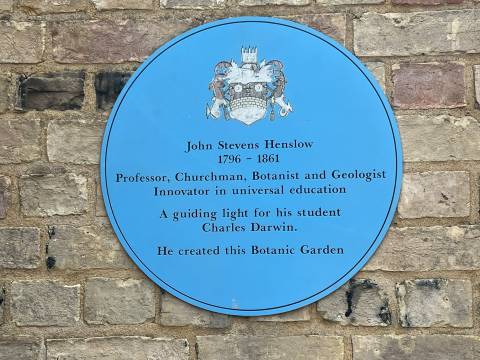
John Stevens Henslow – Cambridge University Botanic Garden (from Cambridge railway station)
A plaque in Cambridge University Botanic Garden honours botanist John Stevens Henslow, mentor to Charles Darwin, whose teaching helped shape evolutionary theory and generations of scientific thinkers.
John Stevens Henslow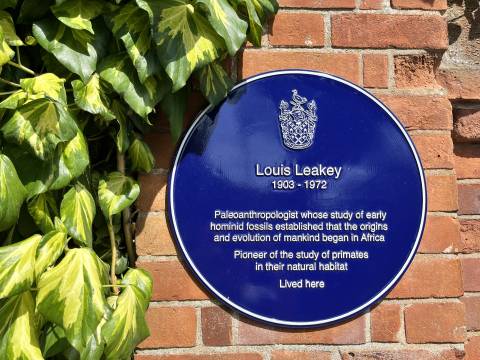
Louis Leakey – Foxton (near Foxton railway station)
Near Foxton station, a plaque recalls paleoanthropologist Louis Leakey, whose work in East Africa transformed understanding of human origins, linking this quiet village to globally significant scientific discovery.
Louis Leakey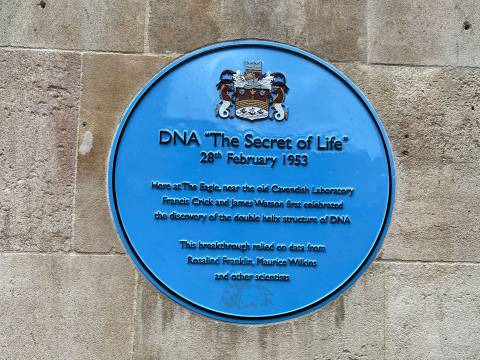
DNA – The Eagle Pub, Cambridge (from Cambridge railway station)
At The Eagle pub, a plaque marks where Crick announced the discovery of DNA’s structure in 1953—an iconic scientific moment, just a short walk from Cambridge station.
DNA "The Secret of Life"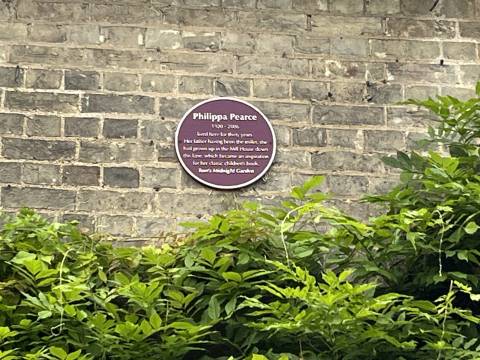
Philippa Pearce – Great Shelford (via Shelford railway station)
In Great Shelford, a plaque celebrates Philippa Pearce, author of Tom’s Midnight Garden, whose imaginative stories were inspired by the local river, mill, and timeless village surroundings.
Philippa Pearce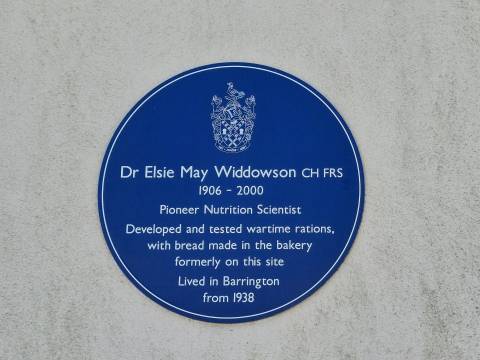
Elsie Widdowson – Barrington (via Foxton or Shepreth)
In Barrington, a plaque honours nutritionist Elsie Widdowson, whose research on wartime diets and infant nutrition shaped modern public health and Britain’s understanding of food, resilience, and wellbeing.
Elsie Widdowson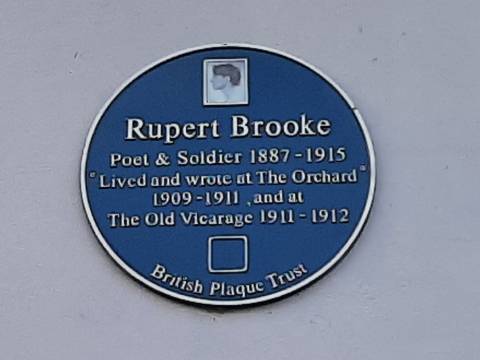
Rupert Brooke – Grantchester (via Cambridge South)
Grantchester’s plaque marks poet Rupert Brooke, whose First World War verse captured an idealised English landscape, still visible today in the riverside scenery that inspired his enduring work.
Rupert Brooke